
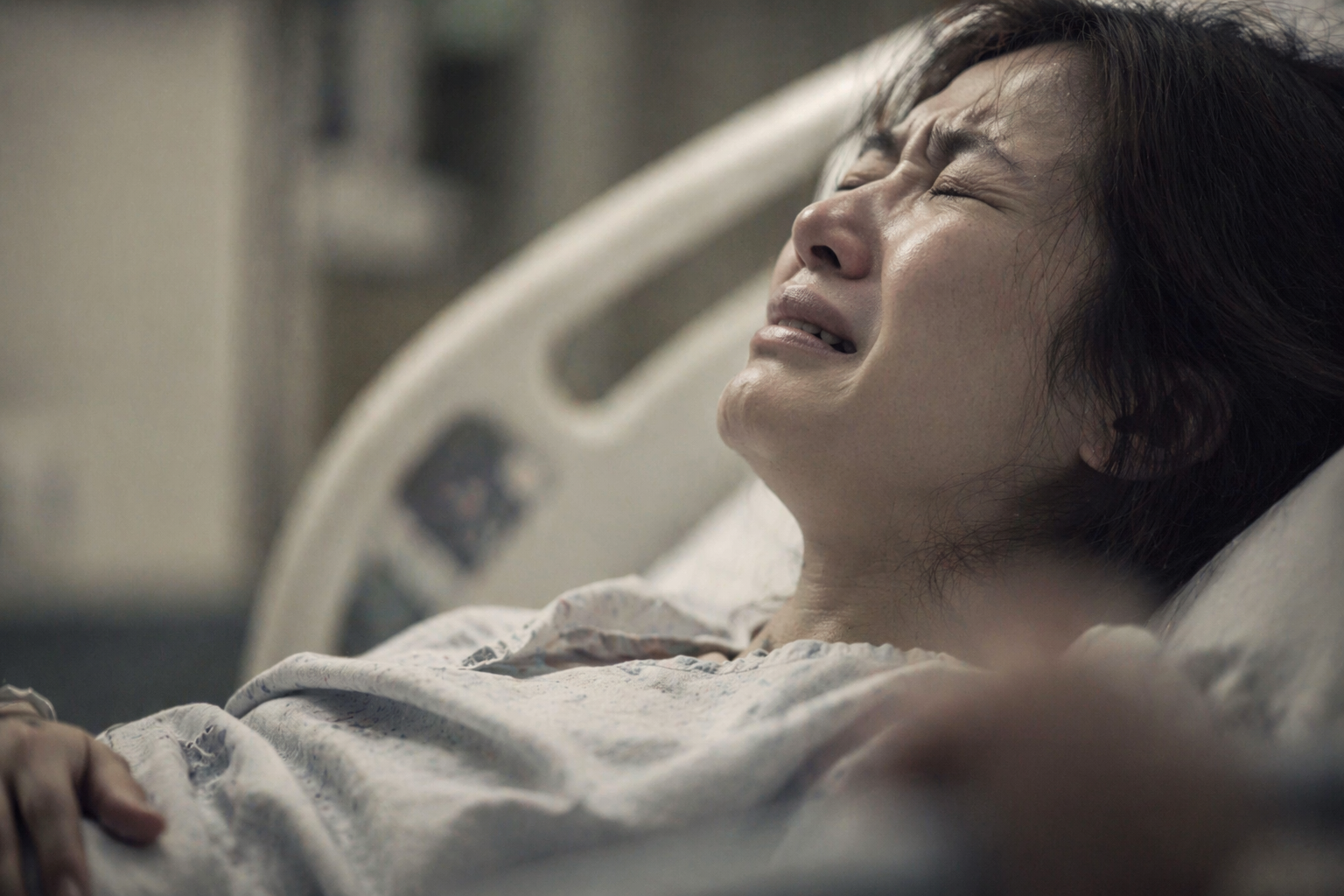
Stillbirth is not often part of everyday conversation. It rarely trends or becomes a national priority, and for many, it feels distant—something that happens quietly, somewhere else, to someone else.
Stillbirth is also often misunderstood. Many people do not clearly distinguish stillbirth from miscarriage, which occurs earlier in pregnancy. As a later-stage loss, stillbirth can involve labour and delivery, and carries distinct and far greater medical, emotional, financial, and social implications.
Yet stillbirth is not without intervention. Global estimates suggest that more than 40% of stillbirths could be avoided with timely and quality care, particularly when risks are recognised early and acted upon.
What makes stillbirth difficult to recognise is not the event itself, but the lack of understanding and open conversation around it. Often considered taboo, it is rarely discussed—leaving many parents to navigate the experience in isolation.
A Signal Hidden in the Data
Even within the community that The Parentinc had built on theAsianparent app, stillbirth was rarely discussed. Only a handful of mothers spoke about their loss. Yet patterns in user behaviour revealed a different story.
Across theAsianparent app, which supports millions of expectant parents across Southeast Asia, this signal began to appear at scale. Over time, data showed a consistent decline in user engagement during the later stages of pregnancy. Further analysis revealed a more difficult reality: some users were no longer continuing their pregnancy journey because they had experienced loss.
This insight prompted a broader examination of the issue. What first appeared as a behavioural pattern pointed to a larger, under-recognised reality: that stillbirth was not just an isolated experience, but part of a wider public health challenge across the region.
In response, The Parentinc launched Project Sidekicks in October 2020, with the aim of translating this insight into meaningful action.
A Regional Reality Often Overlooked
What surfaced in the platform’s user behaviour pointed to a much larger reality across Southeast Asia.
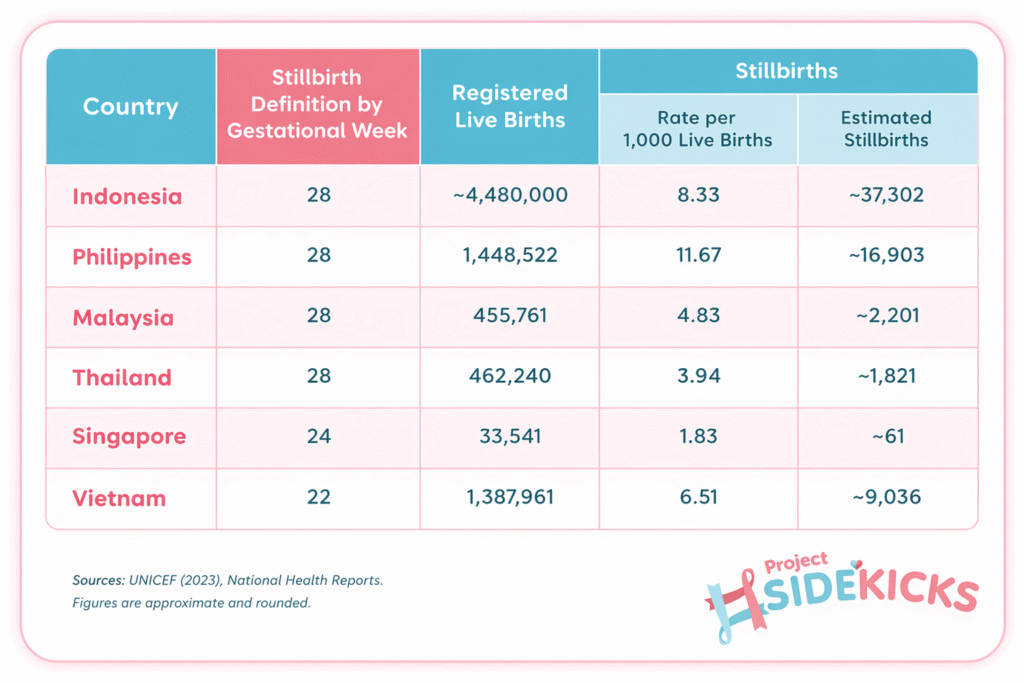
Stillbirth is far more common than most people realise. WHO data shows that each year, over 100,000 stillbirths occur in the region, with the burden unevenly distributed across countries. Indonesia reports the highest number at around 37,000 annually, while the Philippines has the highest stillbirth rate at approximately 11.7 per 1,000 births.
The way stillbirth is defined also varies—and this has real consequences for families. In many countries, it is classified as pregnancy loss from 28 weeks onward. However, 24 weeks’ gestation is widely recognised in medical practice as the threshold of viability, where babies may be able to survive with appropriate medical care. As a result, families who lose a baby before 28 weeks may only receive miscarriage-related benefits, despite having gone through labour and delivery.
Compounding this is the lack of awareness, support, and recognition surrounding stillbirth. Many families are not equipped with the information or guidance needed to respond—particularly at moments when early action can make a difference.
This broader context underscores the purpose of Project Sidekicks: to raise awareness of stillbirth, so that more mothers are equipped to recognise early signs, take timely action, and ultimately improve outcomes.
From Awareness to Action
Project Sidekicks is built on a simple principle: that small, informed actions, when practised consistently, can make a meaningful difference during pregnancy.
The name itself, “Project Sidekicks,” is drawn from the three recommended pregnancy habits that form the core of the initiative. These include: (1) sleeping on the side in later stages of pregnancy, (2) paying attention to a baby’s movements through kick counting, and (3) avoiding smoking. These actions offer practical ways for expectant mothers to reduce the risk of baby loss and stay alert to changes during pregnancy.
Each habit addresses a different aspect of risk. Sleeping on the back in late pregnancy, for example, has been associated with more than twice the risk of stillbirth, while smoking during pregnancy is linked to a 50-100% increase in risk. Changes in a baby’s movements, meanwhile, are one of the earliest signs that something may be wrong, making it critical for mothers to notice and act early.
These are not complex medical interventions, but everyday actions—ones that help reduce known risk factors, improve awareness, and enable earlier response when it matters most. The challenge, however, lies not in knowing what to do, but in doing it consistently.
From Information to Intervention
Turning awareness into consistent action requires more than information alone. To support this, Project Sidekicks combines multiple layers of engagement—content, community, commerce, and technology—so that these behaviours are reinforced across different moments in a pregnant woman’s journey.
Content forms the foundation. Through articles, videos, and social media, medical guidance is translated into practical, everyday advice that parents can easily understand and apply. Animated films have also been developed to make the topic of stillbirth more accessible, helping families better understand risk factors and navigate grief in a more approachable way.
These efforts are reinforced through community engagement. Webinars and campaigns have brought together healthcare professionals, policymakers, and community voices across the region, creating space for more open and informed conversations. Participation has included public sector leaders and health authorities, alongside clinicians and hospital groups, helping to elevate stillbirth as both a medical and societal issue.
Technology enables these messages to translate into action. The Baby Kick Counter, integrated into theAsianparent app, allows mothers to track fetal movement patterns consistently. By making changes more visible, the tool helps mothers recognise when something may be wrong and encourages earlier consultation with healthcare professionals. For many, this becomes part of a daily routine—providing reassurance while also serving as an early warning system.
Support also extends beyond prevention. For parents who experience pregnancy loss, theAsianparent app’s Healing Mode provides structured guidance, resources, and a private space to process grief—an area that remains underserved in many healthcare systems.
These digital efforts are complemented by product-led initiatives. Mama’s Choice, a mother and baby care brand under The Parentinc, supports the programme by producing baby kick counter wristbands—simple, wearable reminders for expectant mothers to monitor fetal movement regularly.
This integrated approach has not only raised awareness, but also translated knowledge into consistent action and sustained support across the pregnancy journey.
From Initiative to Impact
Since its launch, Project Sidekicks has expanded steadily across Southeast Asia, supported by a growing network of supporters across the region. This includes 20 partner organisations, 44 ambassadors, 33 healthcare professionals, and over 1,800 community members—many of whom are parents who have experienced loss.
On theAsianparent app, over 30 million foetal movements have been tracked, representing an estimated 1.7 million mothers who have used the Baby Kick Counter during their pregnancy. In parallel, more than 50,000 parents have accessed Healing Mode for grief support following pregnancy loss.
These figures reflect more than scale. They point to gradual but meaningful shifts in behaviour. More parents are paying closer attention to changes in their pregnancy, and more are taking action when something feels out of the ordinary.
When Platform Meets Policy
As Project Sidekicks evolved, its impact began to extend beyond awareness and behaviour change, highlighting gaps in how stillbirth is recognised and supported at a policy level.
In Singapore, there have been encouraging developments in both recognition and support. In August 2021, a Bill was passed to amend the Child Development Co-Savings Act, giving parents who experience stillbirth access to benefits such as parental leave and financial support.
More recently, in April 2024, the legal definition of stillbirth in Singapore was revised to 24 weeks’ gestation, from a previous threshold of 28 weeks—aligning more closely with the point at which a baby may be able to survive outside the womb with appropriate medical care.
Together, these changes have important implications for affected families, better reflecting the reality that stillbirth involves labour, delivery, and recovery.
In the Philippines, where stillbirth has historically lacked clear legislative recognition, progress has taken a different but equally important form. In October 2024, Project Sidekicks initiated the establishment of National Pregnancy and Infant Loss Remembrance Day, working in partnership with the Department of Health to advance the proposal to the Office of the President. This led to the signing of Proclamation No. 700, formally recognising October 15 as a national observance.
While largely symbolic, the move represents a meaningful step towards national acknowledgement—creating space for greater awareness, conversation, and future policy development.
Where Progress Must Continue
Despite progress, significant challenges remain.
Across Southeast Asia, stillbirth rates continue to be uneven, with higher burdens in countries where access to maternal healthcare is limited. Differences in healthcare infrastructure, socioeconomic conditions, and data availability continue to shape outcomes across the region.
Efforts like Project Sidekicks have shown that increasing awareness, encouraging simple behavioural changes, and providing accessible tools can make a meaningful difference. More parents are paying closer attention to their pregnancies, acting earlier when something feels wrong, and finding support when they need it.
Sustaining and expanding this progress, however, will require continued effort. This includes reaching more parents with timely and relevant information, improving access to tools and support systems, and strengthening collaboration across healthcare providers, institutions, and policymakers. It also means continuing to advocate for clearer and more consistent recognition of stillbirth—particularly in aligning definitions to 24 weeks’ gestation, so that families receive the support they need during a critical time.
Ultimately, the goal is not only to improve outcomes, but to change how stillbirth is understood and experienced. What is often left unspoken must be better recognised—so that parents facing pregnancy loss are not left to navigate it alone, but are met with understanding, support, and care.
Support Project Sidekicks by visiting project-sidekicks.com!