
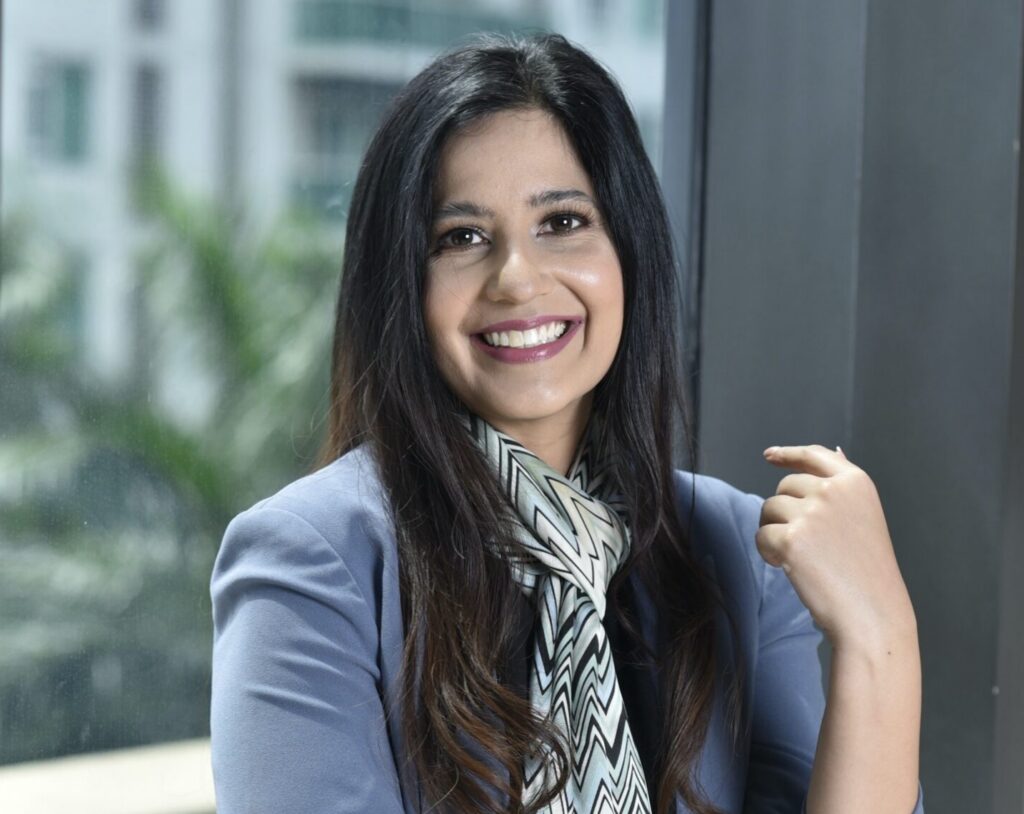
There’s a clarity in how Roshni Mahtani-Cheung talks about resilience. For the group CEO and founder of The Parentinc, resilience is not a buzzword—it’s something lived.
During the Asian Financial Crisis, her family lost nearly everything. One day, life was comfortable. The next, it wasn’t. As a teen then, Roshni began working while still in school—by tutoring and handing out flyers—and learning quickly what it meant to adapt.
“You can lose everything,” she says. “But you can always rebuild. You can adapt, push forward, and find another way.”
That mindset—of responding by rebuilding rather than retreating—would later define how she approached business. It shaped not just how she handled crises, but also the more intentional decisions: what to build, who to build it for, and why it mattered.
For Roshni, The Parentinc didn’t begin as a company. It began as a response to a need she recognised and couldn’t ignore.
Where It Started: A Question Without an Answer
That realisation traces back to her time in New York, where a simple question set everything in motion.
Roshni was babysitting a young girl who asked her what durian tasted like. It was a playful question, yet one that proved harder to answer than expected.
“Before I let her taste durian, I wanted to know if it was safe for kids to eat. I searched online, but I couldn’t find anything,” Roshni recalls.
That absence led to a bigger question. Curious and determined, she began asking fellow Asian friends who were parents where they went for parenting information and advice. Most said the same thing: they turned to their own parents.
That was the moment it clicked.
“I realised then that Asian parents were navigating pregnancy and early parenthood with limited resources that truly reflected their culture, context, and realities,” says Roshni. “It was clear there was a gap, but also a real opportunity to build something that actually spoke to Asian families.”
So she built it.
Not one to wait for someone else to solve the problem, Roshni started theAsianparent as a website addressing Asian parenting concerns. She bought a domain for $10, coded the site herself, and wrote the first 1,000 articles, despite not yet being a mother.
Parents came, stayed, and returned—not just for advice, but for connection. They shared experiences often overlooked in mainstream conversations: breastfeeding struggles, postpartum recovery, and the cultural nuances of raising children in Asian families.
What Roshni created wasn’t just content. It was a space. In time, theAsianparent grew into Southeast Asia’s largest parenting platform, reaching millions of users across six markets including Singapore, Indonesia, Thailand, Vietnam, Malaysia, and the Philippines.
More importantly, it became something else: a living, evolving understanding of what families actually needed.
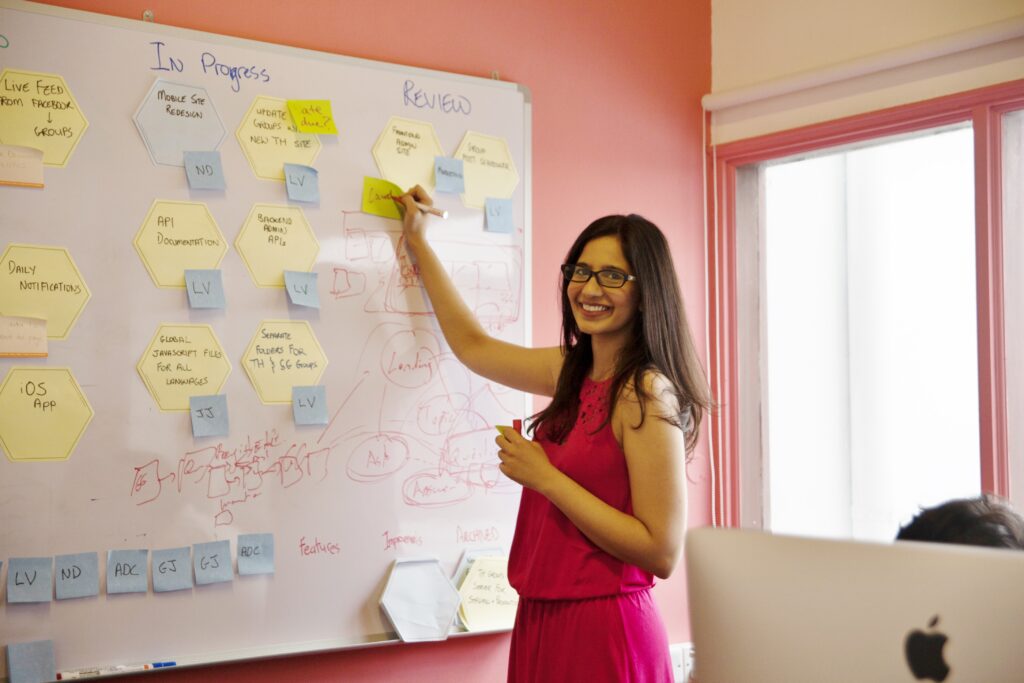
Planning theAsianparent redesign back in 2017
From Community to Commerce: Built on Data, Powered by Empathy
As theAsianparent grew, parents began asking for more than advice. They wanted solutions—products they could trust and recommendations grounded in real experience rather than marketing claims.
“We realised that our purpose was no longer just about providing information. It was about building trust,” Roshni says. That trust became the foundation for the company’s next phase.
By then, Roshni’s own perspective was evolving in parallel. She had become a mother, and the questions she once observed from the community were now part of her everyday life. Her daughter was still young, and the decisions she had to make as a parent gave her a much deeper understanding of the needs, anxieties, and trade-offs that came with raising a child.
“It was one thing to hear what parents needed and address it as a founder. But when I could actually feel the weight of those decisions as a mother, it changed what I prioritised for myself and for the business,” she says.
That shift brought a deeper sense of empathy as a parent, while the founder in her also sharpened the need to validate those instincts with more than just personal experience. Intuition alone wasn’t enough—the next step was to understand parents more systematically.
Roshni launched theAsianparent app which marked a turning point for the company. It transformed what had been a platform for information and community into something more dynamic: an ecosystem that could listen, learn, and respond in real time. Through in-app polls, behavioural data, and direct engagement across millions of users, the company began to understand parents not just anecdotally, but at scale.
“Data drives pretty much every decision that we make,” Roshni emphasises. “But our strongest advantage isn’t just our data. It’s our empathy.”
The convergence of data and lived insight led to the launch of Mama’s Choice—a response to the need among many mothers, especially in Muslim communities, for halal-certified, affordable products for pregnancy, breastfeeding, and postpartum care. It signalled a shift from platform to product—a natural progression from guiding parents’ choices to creating solutions they could directly rely on.
From there, the expansion into new products followed a clear playbook. Little Rei was launched, extending the same data-driven, insight-led approach into sustainable baby essentials. The company also introduced theAsianparent Vitamin D+ Gummies to address vitamin D deficiency among children in the region.
Together, these brands reflected a more deliberate way of operating—grounded in real needs and informed by a continuous feedback loop between community and product. What took shape was not just a business model, but a system where insight could turn into action, quickly and deliberately.
Completing the Experience: Where Online Meets Retail
As The Parentinc’s consumer brands grew, so did the need to meet parents beyond the screen.
While content and commerce had created a strong feedback loop—informing what parents needed and delivering products directly to them—Roshni recognised that parenting decisions don’t happen online alone. Many of them are made in physical spaces, where products can be seen, touched, and experienced.
For her, the move into retail wasn’t just about expansion. It was about completing the journey from discovery to real-world interaction.
The Parentinc’s acquisition of motherswork brought more than just a retail business into the fold. It brought in Sharon Phoong-Wong, a founder Roshni had long respected, and someone who had spent over 25 years in retail and distribution for premium mother and baby products.
“There’s something incredibly valuable about building alongside someone who has spent decades understanding this space,” Roshni says. “Sharon has not only built a strong business, but she’s done it while raising a family of her own. That’s something I deeply respect.”
That alignment—of experience, values, and lived understanding—made the integration feel less like a transaction, and more like a natural extension of what Roshni had already been building.
In 2025, The Parentinc opened its first motherswork ReTech Experiential Store in Ho Chi Minh City. It was designed not just as a place to shop, but as a space where parents could interact with products in ways that reflect how they actually make decisions.
For Roshni, it was another step in the same journey she had been on from the beginning.
“What we’ve always tried to do is stay close to our community,” she says. “Whether that’s through content, products, or physical spaces, it’s about understanding how parents live and building around that.”
That same thinking extends across the company’s digital platforms. Through theAsianparent app, parents move from discovery to decision within a single ecosystem—engaging with content, participating in the community, and increasingly, purchasing through the app’s shopping feature, where trust built through content and community translates directly into action.
Taken together, these layers complete the model—connecting content, community, commerce, and physical experience into a continuous loop. Each reinforces the other, allowing insight to move naturally from conversation to product, and from product into everyday life.
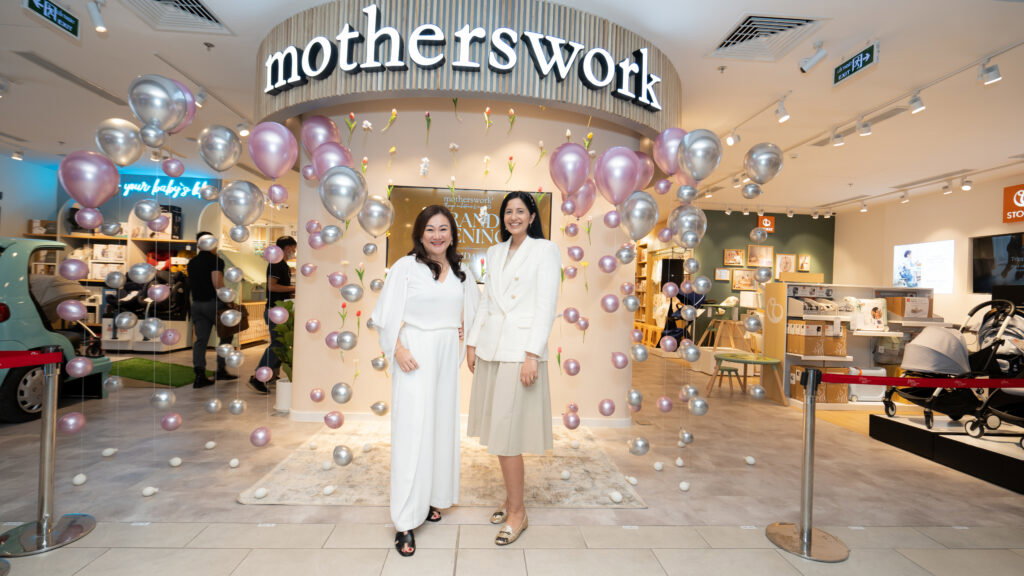
L-R: Sharon Phoong-Wong and Roshni Mahtani Cheung at the opening of the Motherswork ReTech Experiential Center in Ho Chi Minh City
Building by Responding, Not Retreating
Roshni’s journey has never been defined by a single turning point, but by how she responds to what’s in front of her.
When information was missing, she created it. When parents asked for more, she developed solutions. When trust became essential, she found ways to earn and sustain it—through content, products, and experiences.
At each stage, the pattern was the same: identify what wasn’t working, understand it deeply, and respond.
That discipline shaped how the business evolved. What began as content grew into community, then into products, and eventually into a fully integrated ecosystem—each layer grounded in a clearer view of what parents actually needed, and what had long been underserved.
“It’s never been about doing everything at once,” Roshni says. “It’s about knowing what matters, and taking the next step from there.”
It is the same mindset she spoke about at the very beginning—of responding by rebuilding rather than retreating.
And in the end, that is what defines how Roshni works: not by stepping away from uncertainty, but by moving towards it—recognising what matters, and translating it into something that meaningfully improves people’s lives.